

Excel Templates Bring Bank-Grade DCF Valuation to Entrepreneurs
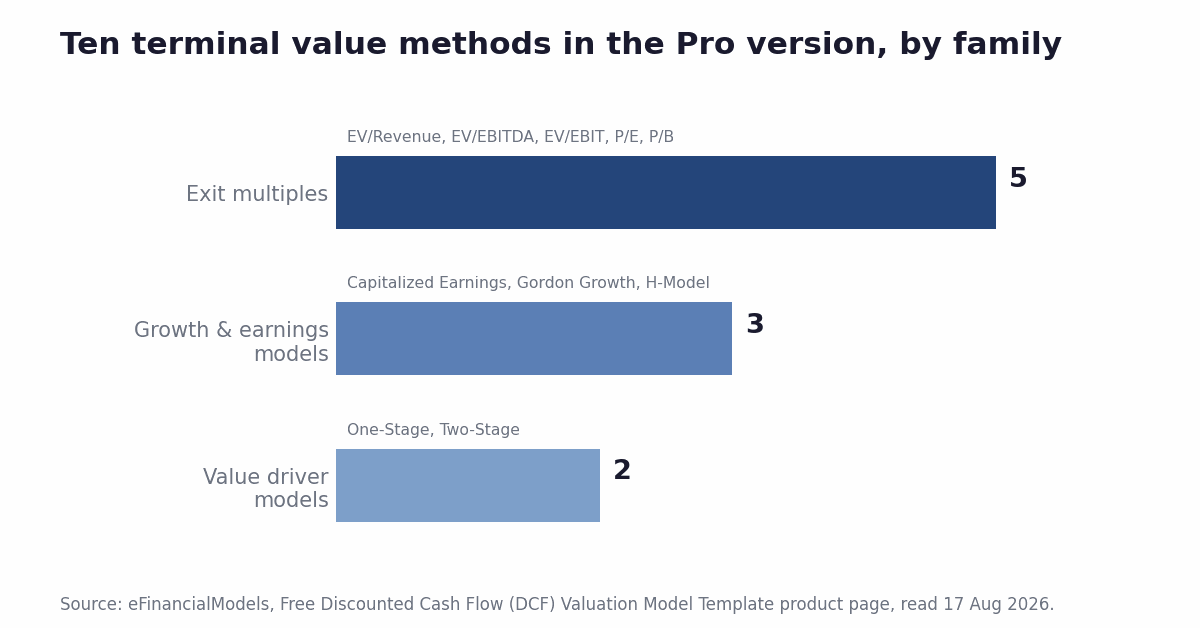
The Pro version's ten terminal value methods span three families: five exit multiples, three growth and earnings models and two value driver models.
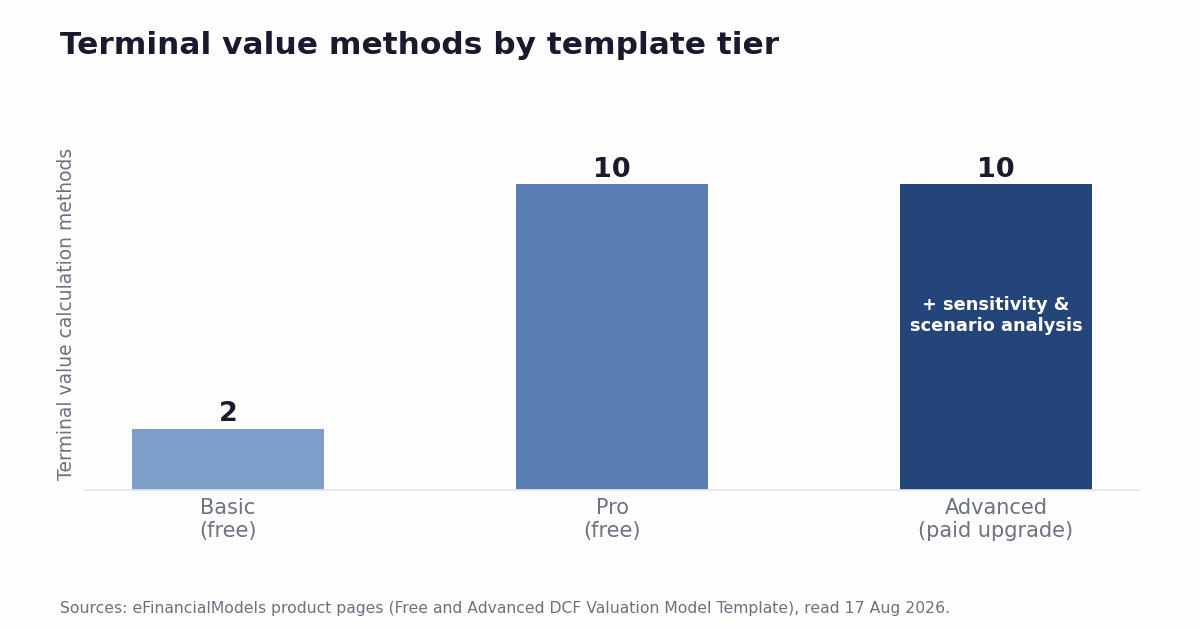
Terminal value method coverage steps from two methods in the free Basic version to ten in the free Pro version and the paid advanced template.
eFinancialModels offers ready-built Excel DCF templates so entrepreneurs can produce an institutional-quality company valuation themselves.
That structure is what separates a serious valuation from a guess. The DCF method values a company by forecasting its cash flows, discounting them at the cost of capital and adding a terminal value, and each of those steps is a place where an improvised spreadsheet quietly goes wrong. With the mechanics prebuilt and connected, the entrepreneur's judgment about the business flows straight through to a defensible number.
"The gap between a professional valuation and a founder's spreadsheet was never the math, it was the structure," said a spokesperson for eFinancialModels. "A template with the WACC, terminal value and cash flow mechanics already built closes that gap for anyone willing to think hard about their own assumptions."
FROM BLANK SHEET TO DEFENSIBLE NUMBER
The free DCF valuation model template ships as a standard Excel file with pre-filled assumptions that users overwrite with their own inputs. Its Basic version applies the Gordon Growth and EV/EBITDA exit multiple methods for terminal value, and the Pro version extends this to ten approaches, including the H-Model, which assumes growth fades gradually to a long-term rate, and value driver models that build the terminal value from margins and growth. Both the Basic and the Pro version are available at no cost, so the method is within reach before any budget exists for advisory work. For heavier work, the advanced DCF valuation model template adds a ten-year monthly forecast, sensitivity analysis and scenario analysis.
HOW ENTREPRENEURS PUT IT TO WORK
Own the Assumptions. The template supplies the machinery; the entrepreneur supplies revenue, cost and growth judgments only they can make.
Let the WACC Calculator Set the Rate. Build the discount rate from the company's actual cost of equity and debt instead of borrowing a round number.
Compare Terminal Value Methods. Running Gordon Growth against exit multiples, which price the business relative to earnings, shows how much of the value rests on the long-term assumption.
Read the Value as a Range. A valuation defended as a range across methods and scenarios is more credible than a single point.
Keep the Workbook Alive. Update the model as real results arrive, so the valuation matures with the business.
Valuing a company this way is inseparable from planning it, since the forecast that drives the DCF is the same one the business will manage its budgets and targets against.
Entrepreneurs can browse the full collection of DCF model templates covering industries from real estate to pharma on eFinancialModels.
Communications Team eFinancialModels
eFinancialModels
info@efinancialmodels.com
Visit us on social media:
LinkedIn
Bluesky
Instagram
Facebook
YouTube
TikTok
X
Legal Disclaimer:
EIN Presswire provides this news content "as is" without warranty of any kind. We do not accept any responsibility or liability for the accuracy, content, images, videos, licenses, completeness, legality, or reliability of the information contained in this article. If you have any complaints or copyright issues related to this article, kindly contact the author above.
