

Immunohematology Market In 2029
Immunohematology Global Market Report 2025_Segments.webp
Immunohematology Global Market Report 2025
Immunohematology Global Market Report 2025_Drivers.webp
The Business Research Company's Immunohematology Global Market Report 2025 – Market Size, Trends, And Global Forecast 2025-2034
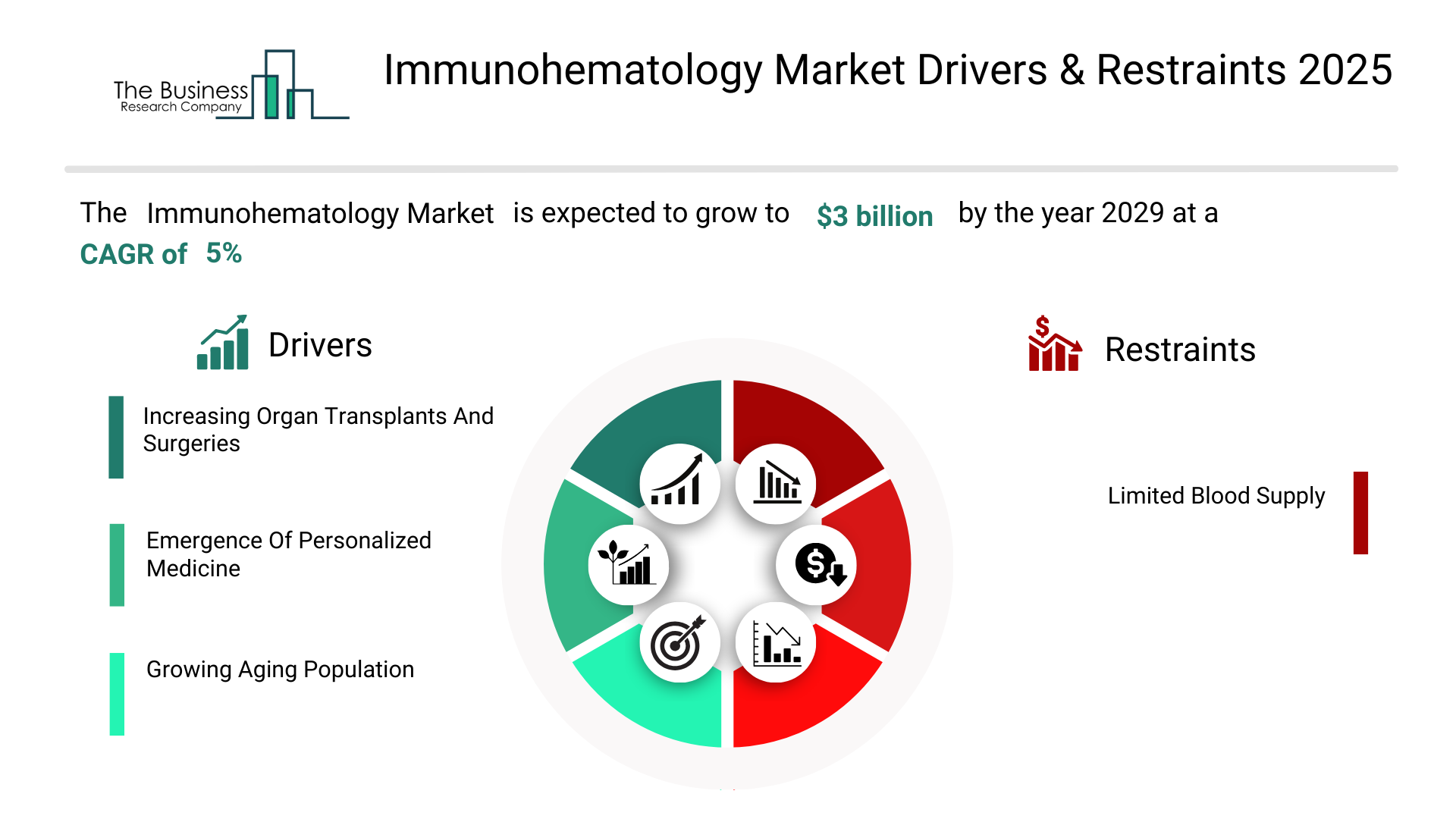
LONDON, GREATER LONDON, UNITED KINGDOM, December 19, 2025 /EINPresswire.com/ -- "Immunohematology Market to Surpass $3 billion in 2029. In comparison, the Blood Products market, which is considered as its parent market, is expected to be approximately $44 billion by 2029, with Immunohematology to represent around 7% of the parent market. Within the broader Pharmaceuticals industry, which is expected to be $2,355 billion by 2029, the Immunohematology market is estimated to account for nearly 0.1% of the total market value.
Which Will Be the Biggest Region in the Immunohematology Market in 2029
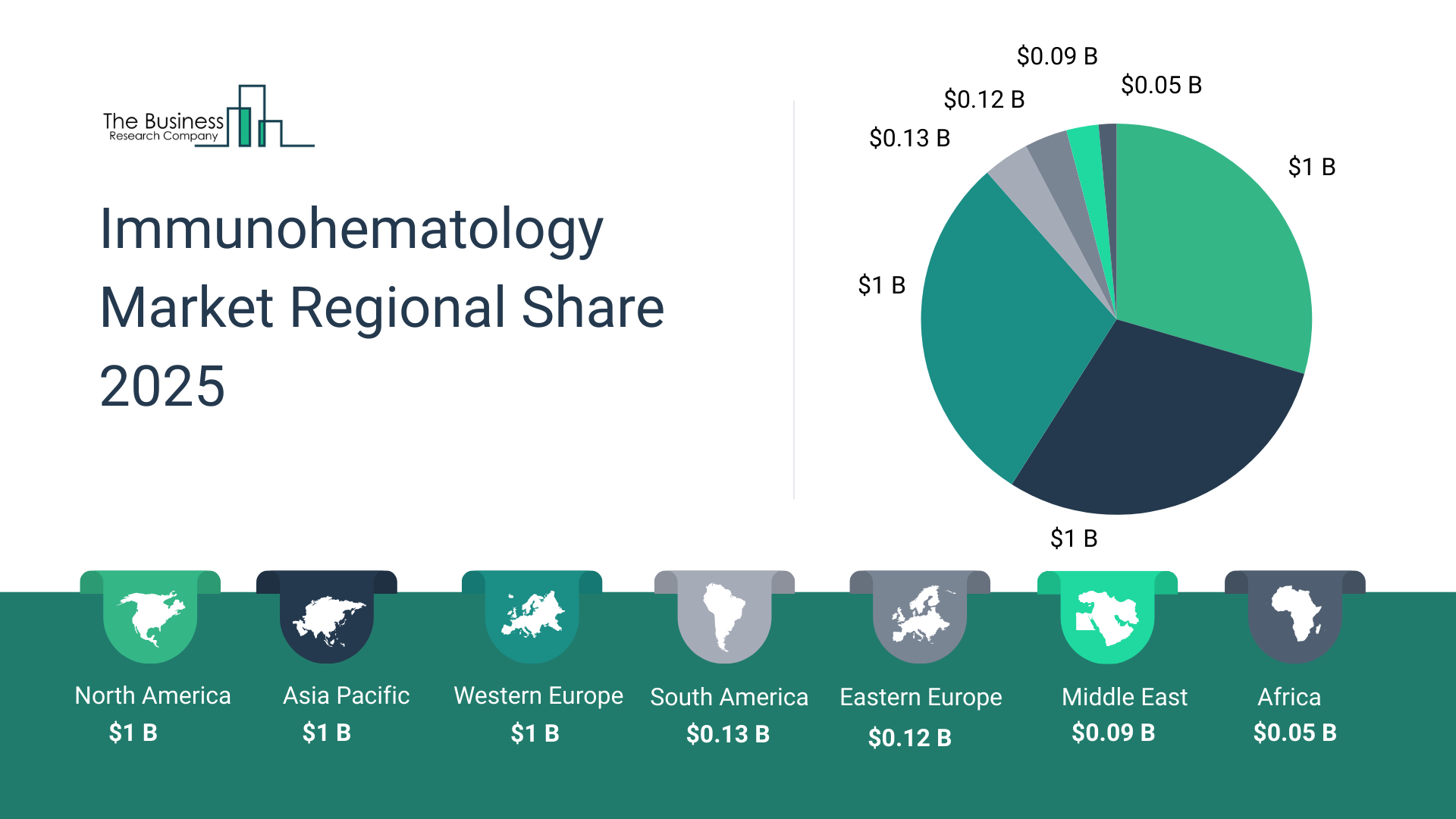
North America will be the largest region in the immunohematology market in 2029, valued at $1,265 million. The market is expected to grow from $977 million in 2024 at a compound annual growth rate (CAGR) of 5%. The strong growth is supported by the favorable government initiatives and the increasing aging population.
Which Will Be The Largest Country In The Global Immunohematology Market In 2029?
The USA will be the largest country in the immunohematology market in 2029, valued at $1,094 million. The market is expected to grow from $853 million in 2024 at a compound annual growth rate (CAGR) of 5%. The strong growth can be attributed to the emergence of personalized medicine and increasing healthcare expenditure.
Request a free sample of the Immunohematology Market report:
https://www.thebusinessresearchcompany.com/sample_request?id=10295&type=smp
What will be Largest Segment in the Immunohematology Market in 2029?
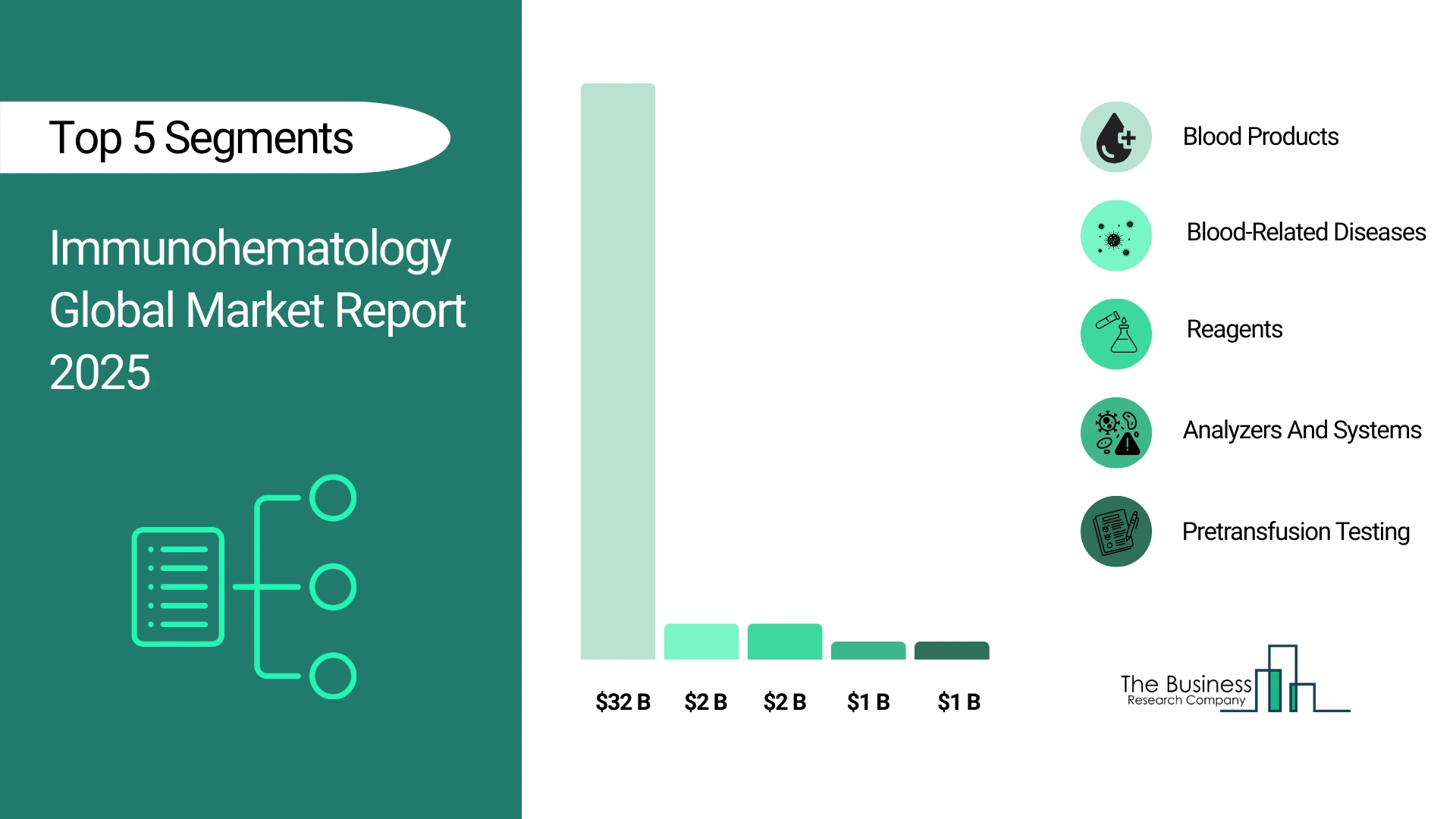
The immunohematology market is segmented by product into analyzers and systems and reagents. The reagents market will be the largest segment of the immunohematology market segmented by product, accounting for 62% or $1,859 million of the total in 2029. The reagents market will be supported by factors such as the rising demand for blood screening and compatibility testing, advancements in reagent formulations, increasing focus on blood safety, the need for enhanced accuracy and reliability in diagnostics, regulatory support for high-quality reagent standards and growing awareness of transfusion-related risks.
The immunohematology market is segmented by technology into biochips, erythrocyte-magnetized technology (EMT), gel cards, microplates, polymerase chain reaction (PCR) and other technologies. The polymerase chain reaction (PCR) market will be the largest segment of the immunohematology market segmented by technology, accounting for 37% or $1,120 million of the total in 2029. The polymerase chain reaction (PCR) market will be supported by factors such as the increasing demand for molecular diagnostics, advancements in PCR technology for blood typing and screening, rising need for highly accurate and sensitive detection of blood group antigens, growing adoption of PCR for genetic testing, regulatory support for PCR-based assays and the rising prevalence of transfusion-related complications requiring precise molecular identification.
The immunohematology market is segmented by disease into blood-related diseases, HIV (Human immunodeficiency viruses) and hepatitis. The blood-related diseases market will be the largest segment of the immunohematology market segmented by disease, accounting for 65% or $1,946 million of the total in 2029. The blood-related diseases market will be supported by factors such as the rising prevalence of hemophilia, anemia and blood cancers, increasing awareness and diagnosis of blood disorders, advancements in diagnostic technologies, the growing need for accurate blood transfusions, expanding healthcare infrastructure and rising demand for personalized treatment approaches in blood disease management.
The immunohematology market is segmented by application into pretransfusion testing, investigation of immune hemolysis, perinatal testing, blood group phenotyping, leucocyte and platelet serology. The pretransfusion testing market will be the largest segment of the immunohematology market segmented by application, accounting for 44% or $1,328 million of the total in 2029. The pretransfusion testing market will be supported by factors such as the increasing demand for safe and compatible blood transfusions, advancements in testing technologies for blood compatibility, rising awareness of transfusion-related risks, regulatory requirements for thorough blood screening, the growing focus on reducing transfusion reactions and the need for accurate and efficient crossmatching techniques in blood banks and hospitals and increased trauma and accident cases and infectious diseases.
The immunohematology market is segmented by end-user into blood banks, diagnostic and reference laboratories, hospitals and academic and research institutes. The hospitals market will be the largest segment of the immunohematology market segmented by end-user, accounting for 42% or $1,270 million of the total in 2029. The hospitals market will be supported by factors such as the increasing number of surgical procedures requiring blood transfusions, advancements in diagnostic technologies for blood typing and compatibility testing, rising prevalence of blood-related disorders, growing demand for safe and efficient transfusion practices, regulatory requirements for accurate testing and blood safety and the expansion of healthcare infrastructure to support advanced immunohematology services.
What is the expected CAGR for the Immunohematology Market leading up to 2029?
The expected CAGR for the immunohematology market leading up to 2029 is 5%.
What Will Be The Growth Driving Factors In The Immunohematology Market In The Forecast Period?
The rapid growth of the global immunohematology market leading up to 2029 will be driven by the following key factors that are expected to reshape blood services, clinical laboratory workflows, transfusion safety, and related manufacturing and supply-chain processes worldwide.
Increasing Organ Transplants and Surgeries - The increasing organ transplants and surgeries will become a key driver of growth in the immunohematology market by 2029. The increasing prevalence of organ transplants has driven a heightened demand for rigorous blood typing and crossmatching to ensure donor-recipient compatibility. Immunohematology plays a critical role in this process by preventing immune rejection of transplanted organs. As the volume of organ transplants continues to grow, the demand for immunohematology testing has correspondingly increased, presenting significant opportunities for growth in this sector. As a result, the increasing organ transplants and surgeries is anticipated to contributing to annual growth in the market.
Emergence Of Personalized Medicine - The emergence of personalized medicine will emerge as a major factor driving the expansion of the immunohematology market by 2029. Personalized medicine, also known as precision medicine, is an innovative approach to healthcare that tailor’s medical treatment and practices to the individual characteristics of each patient. Advancement in personalized medicine, particularly through genomic sequencing, has greatly enhanced immunohematology. Genomic sequencing allows for the precise identification of rare blood types by analyzing genetic markers that determine blood group antigens. Consequently, the emergence of personalized medicine is projected to contributing to annual growth in the market.
Growing Aging Population - The growing aging population within digital manufacturing processes will serve as a key growth catalyst for the immunohematology market by 2029. The aging population increasingly undergoes surgeries such as joint replacements and cardiac procedures, often accompanied by substantial blood loss. Immunohematology plays a vital role in ensuring adequate blood supply for these operations. Additionally, older adults are more prone to blood-related conditions, including thrombocytopenia and hematologic cancers, necessitating diagnostic and therapeutic interventions that rely on immunohematology. Therefore, this growing aging population is projected to supporting to annual growth in the market.
Strong Economic Growth - The strong economic growth will become a significant driver contributing to the growth of the immunohematology market by 2029. Robust economic growth drives increased investments in modern laboratories, blood banks and transfusion services by both governmental and private sectors. It also boosts public awareness and adoption of advanced diagnostic solutions, enabling early detection and effective management of blood disorders. Additionally, higher income levels enhance access to specialized immunohematology services. Consequently, the strong economic growth is projected to contributing to annual growth in the market.
Access the detailed Immunohematology report here:
https://www.thebusinessresearchcompany.com/report/immunohematology-global-market-report
What Are The Key Growth Opportunities In The Immunohematology Market in 2029?
The most significant growth opportunities are anticipated in blood-related diseases immunohematology market, the immunohematology reagents market, the pretransfusion immunohematology testing market, the polymerase chain reaction (PCR) immunohematology market and the immunohematology in hospitals. Collectively, these segments are projected to contribute over $2 billion in market value by 2029, driven by advances in automated blood testing technologies, increasing prevalence of hematological and transfusion-related disorders, and growing adoption of molecular and PCR-based diagnostic platforms for accurate and efficient blood compatibility testing. This surge reflects the accelerating adoption of AI-enabled analysis, advanced reagent innovations, and integrated laboratory automation systems that enable real-time, high-precision blood grouping, antibody screening, and transfusion safety monitoring, fueling transformative growth within the broader immunohematology industry.
The blood-related diseases immunohematology market is projected to grow by $477 million, the immunohematology reagents market by $407 million, the pretransfusion immunohematology testing market by $325 million, the polymerase chain reaction (PCR) immunohematology market by $311 million and the immunohematology in hospitals market by $306 million over the next five years from 2024 to 2029.
Learn More About The Business Research Company
The Business Research Company (www.thebusinessresearchcompany.com) is a leading market intelligence firm renowned for its expertise in company, market, and consumer research. We have published over 17,500 reports across 27 industries and 60+ geographies. Our research is powered by 1,500,000 datasets, extensive secondary research, and exclusive insights from interviews with industry leaders.
We provide continuous and custom research services, offering a range of specialized packages tailored to your needs, including Market Entry Research Package, Competitor Tracking Package, Supplier & Distributor Package and much more.
Disclaimer: Please note that the findings, conclusions and recommendations that TBRC Business Research Pvt Ltd delivers are based on information gathered in good faith from both primary and secondary sources, whose accuracy we are not always in a position to guarantee. As such TBRC Business Research Pvt Ltd can accept no liability whatever for actions taken based on any information that may subsequently prove to be incorrect. Analysis and findings included in TBRC reports and presentations are our estimates, opinions and are not intended as statements of fact or investment guidance.
Contact Us:
The Business Research Company
Americas +1 310-496-7795
Europe +44 7882 955267
Asia & Others +44 7882 955267 & +91 8897263534
Email: info@tbrc.info
Follow Us On:
LinkedIn: https://in.linkedin.com/company/the-business-research-company"
Oliver Guirdham
The Business Research Company
+44 7882 955267
info@tbrc.info
Visit us on social media:
LinkedIn
Facebook
X
Legal Disclaimer:
EIN Presswire provides this news content "as is" without warranty of any kind. We do not accept any responsibility or liability for the accuracy, content, images, videos, licenses, completeness, legality, or reliability of the information contained in this article. If you have any complaints or copyright issues related to this article, kindly contact the author above.
